Poverty Data Gaps
Data related to poverty is critically important for designing effective interventions for the most vulnerable members of society. Gaps in that data can negatively affect research that goes on in government, academia, and the third and private sectors. The result is less capacity to help people out of poverty.
Since June of 2025, we have worked in partnership with the Centre for Public Data to identify poverty-related data gaps. From this work, we have compiled 16 recommendations that we believe will have the greatest impact in addressing them. Broadly, they can be summarised into three headline recommendations:
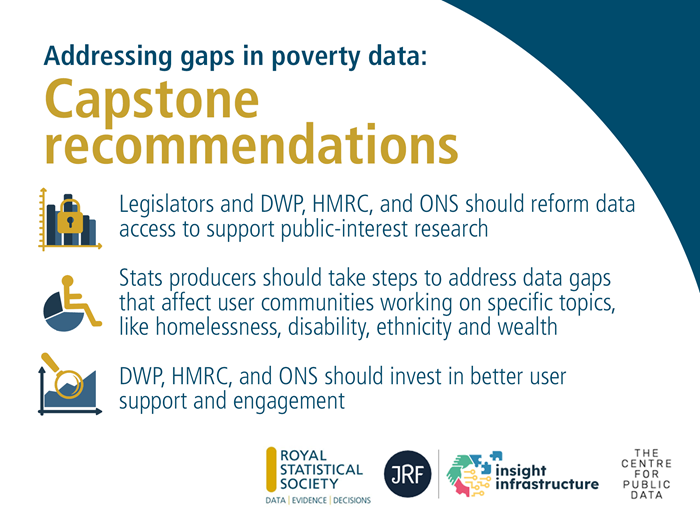
Read our recommendations in full here.
All of our recommendations are motivated by the conversations we’ve had with researchers studying poverty and related subjects through interviews, roundtables, and workshops.
To hear the stories of six of the users we spoke to, check out our case studies.
Many of our recommendations are aimed at systemic issues, while others are motivated by issues we found in more specific topic areas.
For the latter, we’ve compiled a catalogue of over 150 gaps that have been mentioned in civil society research publications from 2020 to 2025. We’ve summarised those gaps here:
The underlying data can be found in our Poverty Data Gaps Explorer tool. Over time, we want the tool to grow into a truly crowdsourced resource for tracking data gaps as they currently exist and affect researchers. We invite you to tell us about gaps you’ve encountered in your own work via this form.
Here, RSS Policy Researcher Dakota Langhals walk you through how to use the tool: