It is once again the time of year when we begin thinking about which new faces will represent us on RSS Council, our principal governing body, starting from 2027.
With five Council members reaching the end of their four-year terms in 2026, we are pleased to be holding this year’s Council election and even more pleased to see nine excellent candidates step forward. It's fantastic to have such a strong group of fellows willing to contribute their time and expertise, and we look forward to welcoming those elected to Council in January. The elction runs from 1 September to midnight on 13 October, with personal voting links emailed to all fellows at the start of the voting window.
In preperation for the election, read on for some insight into your candidates.
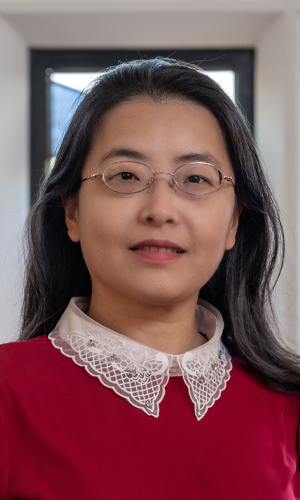
Diwei Zhou
Diwei Zhou is Professor of Statistics at Loughborough University and Co-Lead of the UK Knowledge Exchange Hub for Mathematical Sciences (the KE Hub). She also serves as an Independent Statistics Specialist for the UK Food Standards Agency, providing statistical advice to support evidence-based food policy and regulation.
Her expertise spans applied statistics, artificial intelligence, uncertainty quantification, and data science, with applications in healthcare, engineering, transport, sport, and public policy. She has secured significant research and innovation funding and has led extensive collaborations between academia, industry, and government.
Diwei has substantial leadership and governance experience through senior university leadership roles and national advisory work. She previously served as Associate Pro Vice-Chancellor for Sport, Health and Wellbeing at Loughborough University (2023–2024) and as an Independent Scientific Adviser for the Innovate UK BridgeAI Programme, hosted by The Alan Turing Institute (2024–2025). She served as a Knowledge Exchange Super Champion co-leading fortnightly triage workshops to bridge business, industry and government partners with academics (2023-2026) and the academic leader of the AI in Mathematical Sciences Working Group for the KE Hub (2025-present).
She was Chair of the RSS East Midlands Group (2019–2021) and currently serves as a committee member of both the RSS East Midlands Group and the RSS Statistics in Sport Section.
I would like to support the RSS in strengthening knowledge exchange between statisticians and external sectors, including industry, government, and public policy. Through leading national knowledge exchange activities, I have seen how statistics can drive innovation, support evidence-based decision making, and address real-world challenges through cross-sector collaboration.
As a former Chair of the RSS East Midlands Group and a current committee member of both the local group and an RSS section, I would bring experience in professional engagement, partnership building, and community leadership. I am keen to help create more opportunities for statisticians to engage with external partners while supporting the RSS strategic priorities around innovation and public trust.
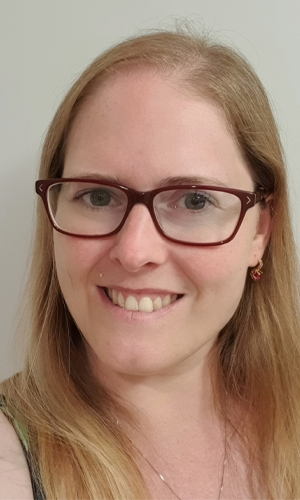
Victoria Cox
Dr Victoria Cox is currently a senior principal statistician at the Defence Science and Technology Laboratory (Dstl). Her statistical experience has been applied across a wide range of defence domains, including combat air capability (Typhoon, F-35, and GCAP), dismounted soldier systems, countermeasures, the Salisbury poisonings and the COVID-19 response.
Victoria believes in the importance of translating complex statistical jargon into accessible, actionable insights; due to this she published Translating Statistics to Make Decisions, which shows statistics can be understood by anyone.
A Chartered Statistician with the RSS, she has contributed a case study to the Statistics Under Pressure initiative. Alongside this, Dr Cox is a Fellow of the Institute of Mathematics and its Applications, an honorary Doctor of Science, awarded by the University of Sheffield, and an honorary Professor in Mathematics, which was given by the University of Birmingham in recognition of her direct operational support contributions.
Dr Cox enjoys sharing knowledge and helping others, and as such, runs internal statistics training courses, has been a mentor in various schemes and is an active STEM Ambassador.
As a statistician in defence, I understand the need to deliver capability both cost effectively and at pace. However, this doesn’t need to occur at the expense of robustness of tests, inclusion of uncertainty, and clear explainability to ensure good evidence-based decision making.
If elected, I’d seek to advocate for the importance of understanding statistics and their models, along with the limitations, especially in the ever-growing age of AI. I’d also want to push for the full picture to be reported for transparency – “negative” results can be just as important as positive results, and I want to work towards organisations and journals accepting this fact.

Elinor Jones
Elinor Jones is a Professor (Teaching) in the Department of Statistical Science at UCL, where she has worked for over a decade. After completing a PhD in probability at The University of Manchester, she worked in a range of statistical roles before moving into academia. Elinor’s professional interests centre on statistics education, curriculum development, and how to prepare learners for a rapidly changing landscape shaped by data. More recently, she has become increasingly interested in the implications of AI for education and assessment, and how statistics education must evolve in response.
Elinor has been actively involved with the RSS for many years, co-founding the Teaching Statistics Special Interest Group in 2019 and chairing its transition into the Teaching Statistics Section, serving as Chair until 2025. She also co-chaired the organising committee for the UK Conference on Teaching Statistics (UKCOTS) in 2024 and 2025, with the next conference planned for 2027. She currently serves on the RSS Academic Affairs Advisory Group and previously served on the Education Policy Advisory Group.
Beyond the RSS, Elinor is active in the International Association for Statistical Education, serving as an Associate Editor of the Statistics Education Research Journal and contributing to the organisation of international conferences, including as Proceedings Editor for the International Conference On Teaching Statistics in 2026. She has co-authored the third edition of The R Book (2023) and was elected a Fellow of the Academy for the Mathematical Sciences in 2026.
I would welcome the opportunity to bring my experience in statistics education to RSS Council. Having been actively involved with the Society for many years, including co-founding and chairing the Teaching Statistics Section, I have a longstanding interest in how we develop statistical understanding and critical engagement with data and evidence. As AI becomes increasingly embedded in society, it is more important than ever that we equip students and the wider public with statistical and data literacy skills appropriate to their needs. I am committed to widening participation and improving public understanding of the role statistics plays in modern society.
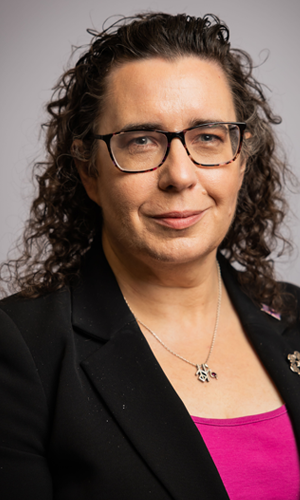
Janet Bastiman
Dr Janet Bastiman has over 25 years’ experience in complex data problems in multiple industries, with the past decade as Chief Data Scientist with Napier AI, advocating for responsible AI use. For the past few years, she has also led the research of the Napier AI AML Index, providing quantifiable scores for how different regions use AI most effectively in the fight against financial crime.
Janet is highly active in the RSS community, having been a member of the Data Science and AI section since joining the Society and serving as Chair for the past few years. She was also appointed Vice Chair of the AI Task Force and is a member of the Campaigns Advisory Group.
Janet received her undergraduate and masters in biochemistry from Oxford University, which laid the foundations of her statistical approach to data, followed by a PhD in computational neuroscience at Sussex University. She has continued studying alongside working, and now also holds an undergraduate degree in mathematics and was recently awarded an MSc in finance for her studies of geopolitical influences on financial crime compliance.
She also supports her local schools with sixth form interview practice as well as careers talks for year 9 students to support STEM initiatives. Janet regularly speaks at industrial conferences worldwide on effective use of artificial intelligence and best practises for ensuring statistically sound decision-making using AI in regulated industries.
This year, she was also named one of the 25 top individuals in Computing’s AI Leadership Index, defining what leadership means in the age of AI.
I’ve been a passionate advocate for the RSS as the home for Data Scientists. I would love to continue that work as a Council member, using my industry experience and reach to support RSS objectives and bring more industry attention to the skills and best practises that the RSS provides. It’s critical that, as AI races ahead in ubiquity, the statistical skills we champion become more central in the development and assessment of these systems.
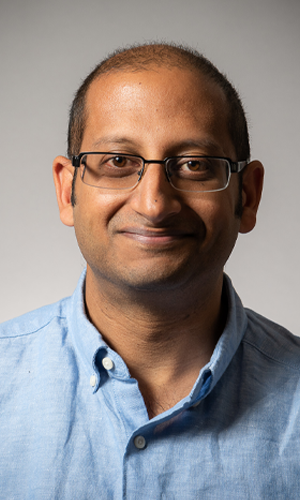
Matthew Nunes
Matthew Nunes is Professor of Statistics at the University of Bath, Department of Mathematical Sciences, where he has contributed to doctoral training on interdisciplinary collaboration, helping colleagues maximise the impact of their research. Before joining the University of Bath in 2018, he held postdoctoral positions at the University of Bristol, University College London and Imperial College, followed by an academic position at Lancaster University.
His research focuses on computational statistics, particularly in time series and image processing, with applications in industrial data science, environmental modelling and the biosciences. Over the course of 20 years as a methodological statistician, Matthew has actively sought to undertake impactful research, having collaborated with industrial partners from diverse fields such as telecommunications, meteorology, security, creative arts, official statistics, precision engineering and digital health. His recent grant-funded research focuses on statistical challenges in network science, as well as at the interface between signal processing and AI. He is deeply committed to mentoring early-career researchers and has supervised 12 PhD students and two postdoctoral research associates.
Matthew has been an RSS fellow for over 15 years, previously contributing to Society activities such as serving on the Lancashire and East Cumbria RSS Local Group
committee and delivering preparatory instructional sessions to non-expert participants before Discussion Paper meetings.
I am excited to stand for election to RSS Council. I am passionate about the use of principled statistical thinking in all aspects of public life and the crucial role the Society plays in promoting the importance of statistics. I bring experience in both academic research and industry collaboration and am committed to supporting the Society in strengthening its mission to promote statistical understanding and the inclusive, collaborative and impactful use of statistics across science and the wider community.
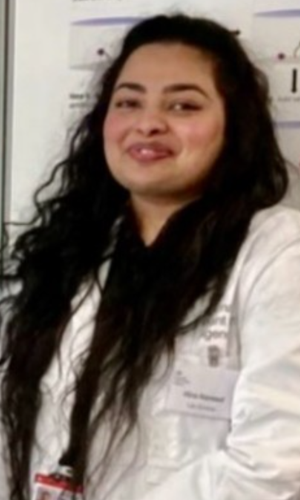
Hira Naveed
Hira is a Statistician at the Animal and Plant Health Agency (APHA), where she works with complex epidemiological and surveillance data, including whole genome sequencing, to support evidence-based decision making in animal health and government policy.
She is currently completing an MSc in Human-Computer Interaction Design, specialising in user research and user-centred design. Her work focuses on bringing together statistics, design and engagement to ensure analytical tools, visualisations and evidence are accessible, meaningful and useful to the people who rely on them.
Alongside her statistical role, Hira has led and contributed to a range of user-centred design and user engagement initiatives across government. She has played a key role in promoting user engagement within the Government Statistical Service (GSS), serves as a GSS Presentation Champion, and has helped develop user engagement best-practice guidance across Defra. She is passionate about improving accessibility and ensuring that statistics are communicated clearly and effectively to diverse audiences.
Hira has been actively involved with the Royal Statistical Society for many years and most recently served as Chair of the Official Statistics Section. She is also a member of the Roehampton University Computing Advisory Board and actively supports collaboration between academia, government and the wider statistical profession.
Passionate about supporting early-career statisticians, women in statistics and colleagues from underrepresented backgrounds, Hira hopes to bring a practical, inclusive and user-centred perspective to RSS Council, helping to strengthen the impact, accessibility and relevance of statistics across society.
I am standing for RSS Council to champion a profession that is not only statistically rigorous, but also accessible, inclusive and user-centred. Through my work in government, my involvement with the RSS and GSS, and my studies in Human-Computer Interaction Design, I have seen how effective communication, accessibility and engagement can strengthen the impact of statistics. I am passionate about supporting early-career statisticians, widening participation and helping statistics reach the people who need it most. I would bring a collaborative, practical and outward-looking perspective to Council.
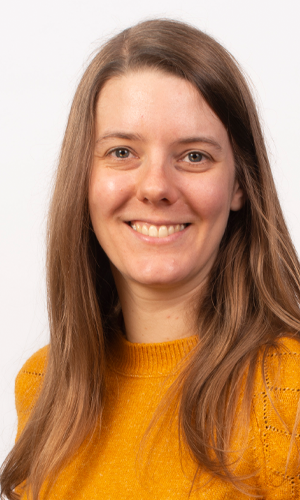
Amy Wilson
Amy Wilson is a lecturer in industrial mathematics at the University of Edinburgh, with an academic background in applied statistics. Since completing her PhD in forensic statistics in 2014 at Edinburgh, she has held research associate roles at Durham and Edinburgh in the statistics of energy systems, beginning her lectureship in 2019.
She works across a broad range of domains, researching how statistics can be applied to support decision-making in policy and industry, having received funding to support work on statistics as applied to forensic science, defence, energy systems, quantum computing, flood modelling, and digital twins for construction sites. In 2022, she won the Edinburgh Mathematical Society Impact Prize for work in energy systems.
Amy is the current Chair of the Royal Statistical Society Statistics and the Law Section (since 2022), having been an active committee member since its inception in 2015. She has led cross-disciplinary efforts to strengthen the use of statistics in the law, including by organising, chairing and speaking at events, running training sessions for lawyers, co-authoring interdisciplinary guidance with the Inns of Court College of Advocacy and the Royal Society/Royal Society of Edinburgh, and developing external collaborations with organisations such as the Forensic Science Regulator (sitting on three advisory panels), National Police Chiefs’ Council, and the British Medical Journal. On behalf of the Royal Statistical Society, she has led contributions to major government consultations on law and forensic science, as well as seeking permission to intervene in a Supreme Court case on risk of asbestos exposure.
I am dedicated to championing the robust and rigorous use of statistics in policy and for the public interest and have supported the Society in this aim with over ten years of volunteer work.
If elected, I will work to strengthen engagement and cooperation with a broad range of external stakeholders, using these connections to inform policy and advocate for better use of statistics. Furthermore, I will support the Society in developing statistical training courses for non-statisticians, to encourage better understanding of the value of statistical thinking and will work to provide early-career statisticians with opportunities to broaden their experience.
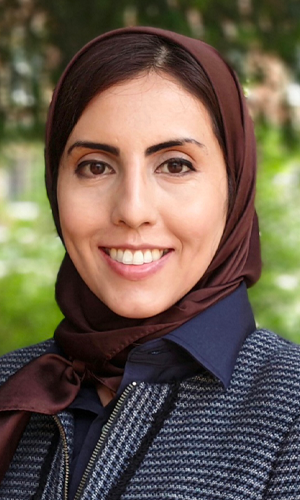
Fatemeh Torabi
Fatemeh Torabi is an assistant professor in healthcare data science at the University of Cambridge and a senior researcher in the Population Data Science team at Swansea University. Fatemeh’s rigorous, multidisciplinary research background operates across methodological and applied domains, advancing innovative statistical and computational frameworks for risk prediction, treatment optimisation and study design with particular focus through her PhD on cardiovascular disease.
She has established methodological leadership in analysis of population-scale datasets, helping to shape the field and drive the evolution of federated analytics and trusted research environments. She is focused on advancing equitable, secure cross-national data access to accelerate discovery and patient benefit at scale. She is leading CONNECT-AF: a large-scale, multi-environment study bringing together data across the UK to investigate clinical outcomes in patients with Atrial Fibrillation.
Fatemeh’s commitment to rigorous statistical thinking in how data is used, reported, and trusted has also been clear during her tenure on the RSS Real World Data Science editorial board. She is deeply committed in training of the next generation of scientists. She serves as the director of the flagship MSt in healthcare data science programme at the University of Cambridge Institution of Professional and Continuing Education and has led the development and delivery of one of the first MicroMasters qualifications in healthcare data science. Her contributions reflect a sustained commitment to building scientific capacity at scale and ensuring that methodological innovation translates into meaningful, real-world healthcare improvement.
I have volunteered with the RSS throughout my career and am honoured to stand for election to the RSS Council. My perspective is shaped by over a decade experience at the intersection of statistics and data science across Academica, the NHS, and public data infrastructure, where I’ve seen good statistical practice change real outcomes.
If elected, I will champion the RSS's role in applied data science, equitable access to good statistical practice, and the needs of practitioners working beyond academia. I will strengthen our links with organisations supporting early-career statisticians and help ensure the discipline speaks clearly and confidently to the challenges of our time.
Andrej Srakar
Andrej Srakar is mathematician, probabilist and economist currently studying for his second PhD. He works in the artificial intelligence department of the Jozef Stefan Institute in Ljubljana, alongside his job as a lecturer in economics at University of Ljubljana.
Since 2022, Andrej has volunteered on the RSS Emerging Applications Section, including as meetings secretary and its representative in the RSS Discussion Paper Meetings Committee. He coordinated the call for submissions for the special issue in 2023 on analysis of citizen science data, in 2025 on causal inference and now jointly in 2026 on the roles of statistics and machine learning in artificial intelligence. He coordinated 23rd European Young Statisticians Meeting in 2023, and the YoungStatS project and the One World YoungStatS webinar series of the Young Statisticians Europe initiative (FENStatS association), supported by the Bernoulli Society and the Institute of Mathematical Statistics.
Andrej’s research interests are broadly on the intersection of probability theory and analysis, including extensions to Bayesian probability, mathematical foundations of causality, and probability for econometrics, cultural economics, symbolic data analysis and citizen science data. A Fulbright scholar in 2011/12, he received first prize for the presentation of a young scholar at the 10th Bernoulli-IMS World Congress in Probability and Statistics in 2021.
With the growing presence of AI, we are currently living through the fourth industrial revolution. If elected to RSS Council, I would focus on constantly adapting to these turbulent and exciting times for statistics and statisticians. I think the Society should be a leader in making the necessary advances while also being mindful of how this may impact our members and other statisticians in the labour market. Conference, research, policy, communication and all other areas of RSS activities should be enhanced consequently, while also remaining reasonable about the changes made. Finally, I wish to provide a voice for underrepresented groups, in particular young scholars.
We hope you enjoyed getting to know our candidates! Voting links will be sent to all fellows once the elections begin, so be sure to make your voice heard in the future direction of the Society.